
Wildlife protection within the construction industry has been taken to a new level at our development The Copper Beeches.
The Copper Beeches is a luxury property development that stands on the site of the former Lluesty Hospital in Holywell, Flintshire. The old hospital and chapel building are being converted into 70+ modern 1-3 bedroom apartments, maintaining and restoring multiple architectural features of the Victorian landmark.
Along with the construction of these apartments, the development will include an ecology zone toward the upper part of the site. A key aspect of this zone will be a stand-alone building dedicates towards bat roosting.
Bats and the Construction Industry
There are multiple wildlife impacts to be considered before, during and after the construction of a development as large as The Copper Beeches. Implementing protection measures for species such as bats on construction sites is common along with badgers, newts and several bird species. There are 18 species of bats in Britain that are legally protected.
According to the licensed bat ecologists whom we worked with, ‘buildings present a whole range of potential roost sites’. These include ‘any cracks and crevices, roof tiles or weatherboarding, and/or in the roof space along the ridge beam and at timber joints’.
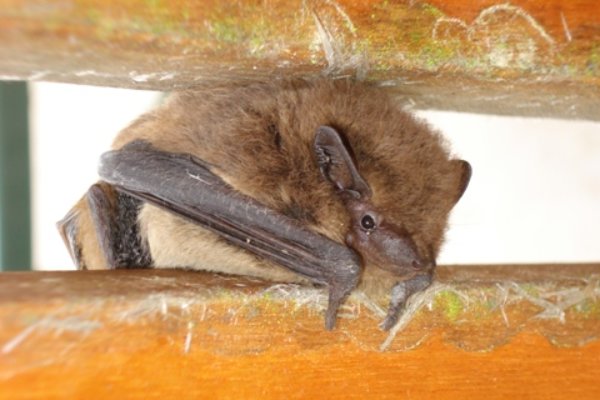
Following multiple surveys by the team of ecologists, the Copper Beeches site was classed as a potential roosting site for bats including common species such as brown log eared, common and & soprano pipistrelles. A mitigation strategy was developed for these species which included the installation of various bat boxes within the ecology zone and bat friendly features within the new build properties.
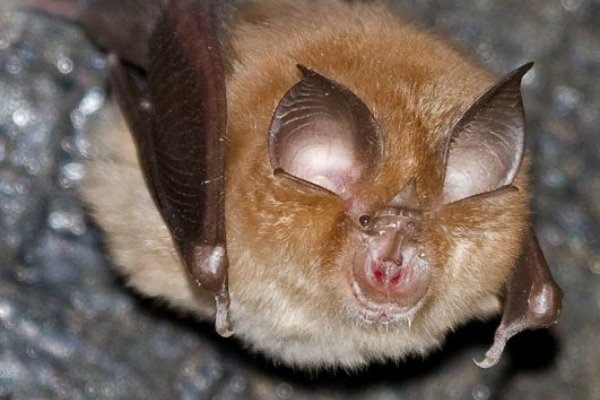
The site was also identified as a potential roosting site for lesser horseshoe bats which are rare throughout Europe but are known to roost in Wales and Devon. Lesser horseshoe bats have a different sets of roosting requirements and as such needed a different type of mitigation strategy. Whereas most bat species crawl into spaces to roost, lesser horseshoe bats prefer hanging. Due to this, their roosting sites are similar to a derelict building with open spaces for hanging and flight access. These specific requirements led to development of the bat barn.
The Bat Barn
After the recommendations from the ecologists, we started work on a bat barn. Located at the top of the site, the aim of the barn was to provide the bats with a new roosting site that would reflect the environment of their old one in the former Lluesty Hospital. Due to old works on the site – before McCrory Holdings owned it – a large part of the bats roosting areas had already been taken down. The construction of this barn was important to accommodate the lesser horseshoe bats and make up for what was lost.

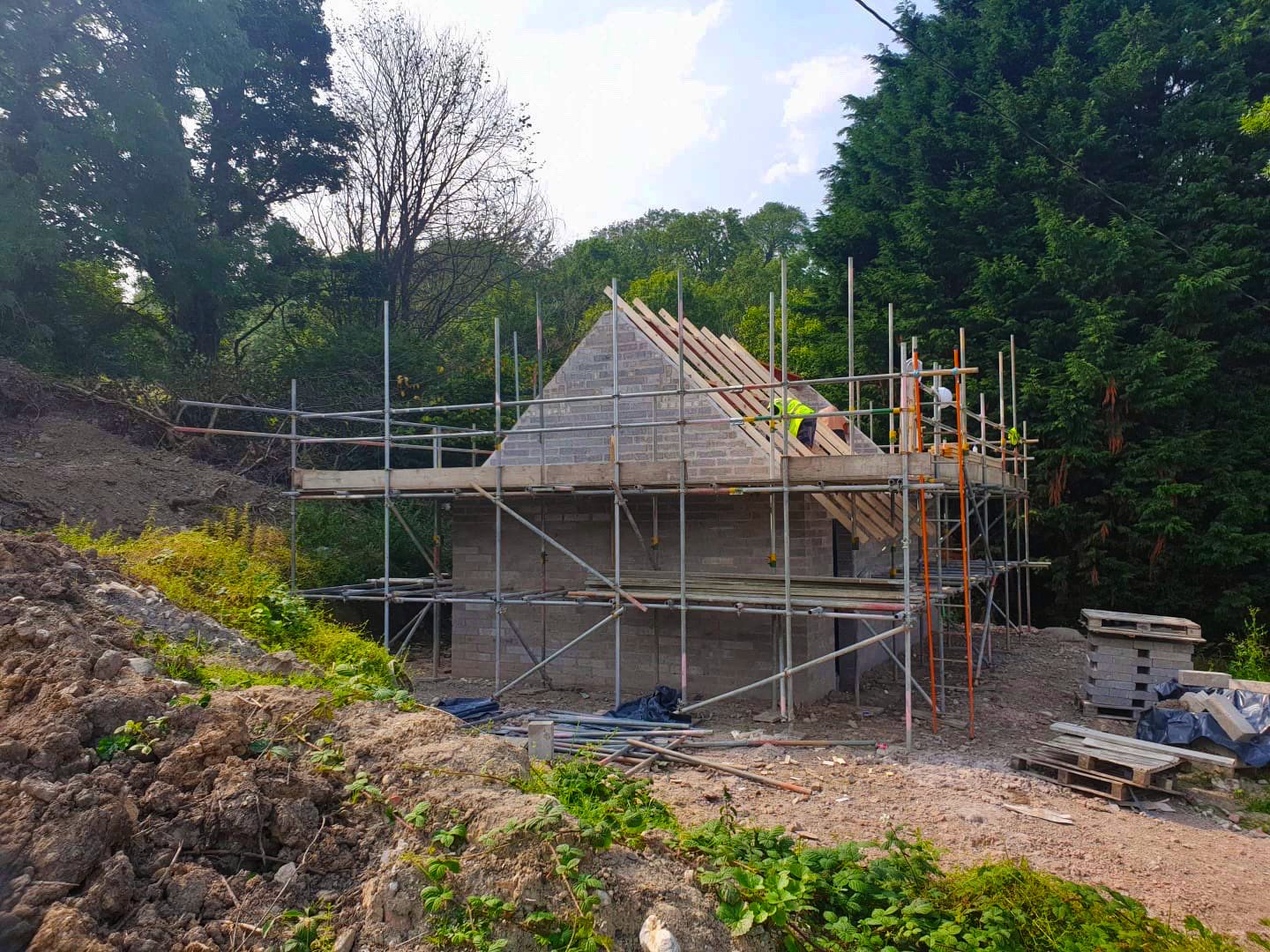
The bat barn was built in line with best practice to provide a summer and winter roost area. The lower ground is cooler and more suitable for roosting in the summer months whilst the upper floor/attic area has a hotbox built in to provide a naturally warmer area for winter roosting. The building is oriented north to south to provide a warmer end and a cooler end with a chimney style access installed on the north gable. Traditional bat friendly roofing felt was used and one room on the ground floor even has an earth floor to keep it a little cooler.
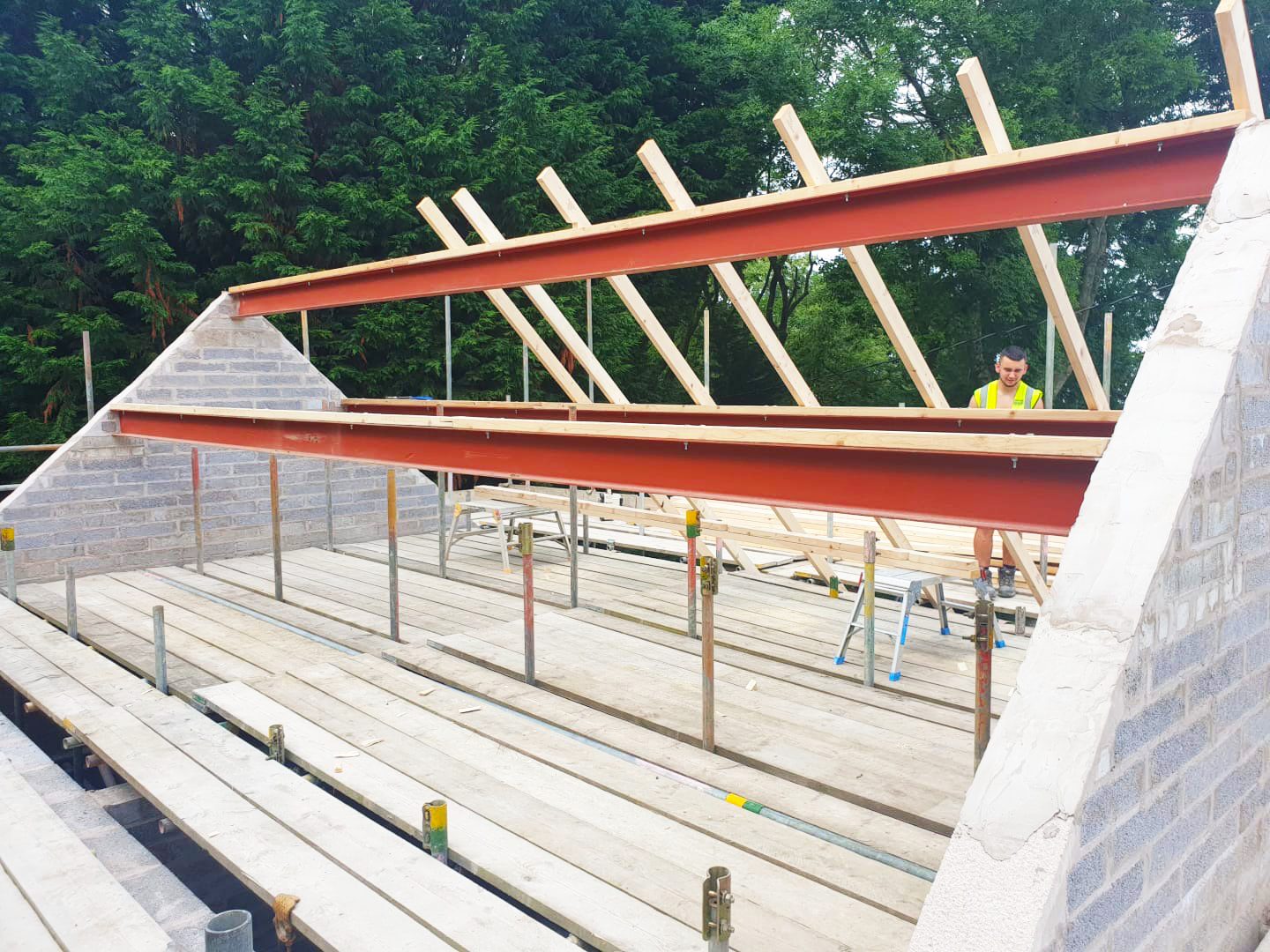
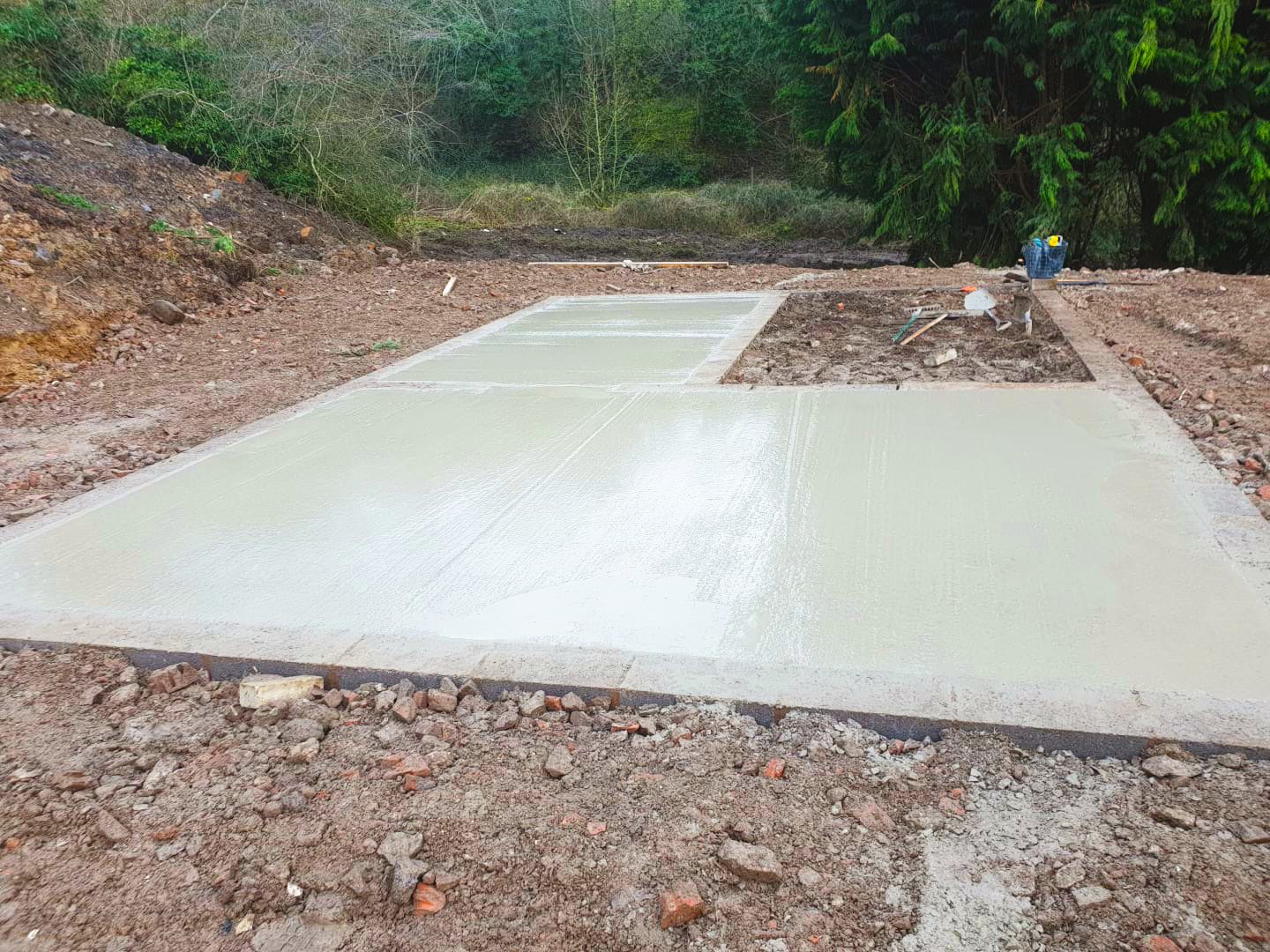
The ongoing construction of the bat barn includes foundations, concrete slab, blockwork, roof structure, roofing works, a front door and more. This totals at an estimated cost of up to £20,000.
Construction Work and its Environmental Impacts.
Environmental and conservation topics are important in the construction industry as projects are resource heavy and can have detrimental effects on the environment around them. Along with the bat barn, we use various sustainable approaches within the construction of the property development. This includes rainwater harvesting methods, waste recycling and local employment which can be read about here.
It is to be noted that before McCrory Holdings acquired the Lluesty Hospital site, previous construction work was conducted without a bat mitigation license. Since their initial interest of the site and after acquiring the rights, McCrory Holdings received the necessary licenses to legally begin work and implemented all conservation methods recommended by the team of ecologists.